


Military Sealift Command Pacific announced the successful completion of the 2026 cargo resupply mission to Antarctica. This critical undertaking delivered essential supplies for U.S. operations on the continent. The Military Sealift Command (MSC) consistently plays a pivotal role in these vital annual logistical efforts.
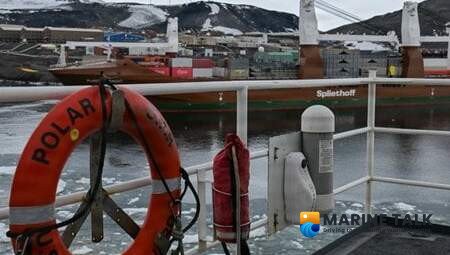
Supporting U.S. Antarctic Presence
MSC Pacific reported the mission’s successful conclusion, marking a significant achievement for American endeavors in the remote polar region. The operation involved transporting a wide array of goods. These items are necessary for sustaining life and research at the U.S. Antarctic station.
Essential supplies include food, equipment, scientific instruments, and fuel. Their timely delivery is paramount for the safety and productivity of personnel. These individuals work in one of the world’s most challenging environments.
Military Sealift Command Pacific successfully completed its 2026 cargo resupply mission to Antarctica, delivering essential food, fuel, equipment, and scientific instruments. This annual undertaking is critical for sustaining U.S. operations and research, supporting personnel in extreme conditions, and enabling scientific endeavors on the continent.
MSC’s Critical Logistical Role
The Military Sealift Command regularly undertakes these complex annual missions. Their expertise in maritime logistics proves indispensable for maintaining the U.S. footprint in Antarctica. This involves careful planning and execution across vast ocean distances.
MSC’s consistent support enables scientists and staff to conduct crucial research. This includes studies into climate change, glaciology, and other fields. The command ensures necessary resources remain available without interruption.
Impact on Scientific Endeavors
The successful resupply allows the U.S. Antarctic Program to continue its long-standing commitment to scientific exploration. It directly supports personnel living and working in extreme conditions. This enables groundbreaking discoveries.
Such missions highlight the strategic importance of robust logistical capabilities. They support international scientific collaboration and national interests in remote territories.




Leave a Comment