


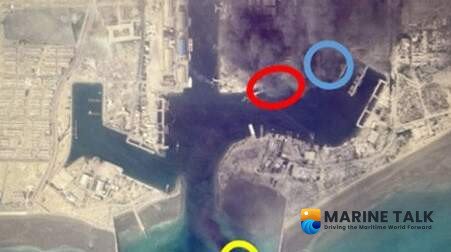
Satellite imagery captured at midday (UTC) on March 2 revealed the Bandar Abbas Naval Harbor wreathed in thick black smoke. The distinctive pattern and dispersal of this smoke strongly suggest the aftermath of multiple impacts or a significant incident at the facility. Observers noted the significant plume rising from the critical naval installation.
Observation Details
The visual evidence originates from imagery taken over Bandar Abbas. This data provided a clear, overhead perspective of the naval harbor at the specific time of observation. The thick black smoke stood out prominently against the surrounding landscape, indicating an event of considerable scale.
Analysts processed the satellite data to pinpoint the exact location and characteristics of the smoke. The timestamp of midday UTC on March 2 offers a precise moment for the incident’s visible aftermath. Such imagery serves as a crucial tool for monitoring activities in sensitive regions globally.
Satellite imagery captured midday UTC on March 2 revealed thick black smoke billowing from the Bandar Abbas Naval Harbor. The distinctive smoke pattern and dispersal strongly suggest the aftermath of multiple impacts or a single, highly significant incident at the critical naval installation, though precise details remain unconfirmed.
Analysis of Smoke Patterns
The specific pattern and dispersal characteristics of the smoke cloud provided key insights. Experts interpreting the imagery concluded these features indicate a scenario consistent with multiple impacts. Alternatively, the observations could point to a singular, yet highly significant, incident at the naval harbor.
The nature of the smoke—its density, color, and how it spread—contributes to this assessment. These visual cues offer valuable information regarding the type of event that occurred. Further details regarding the precise nature of the incident remain unconfirmed.


Leave a Comment