


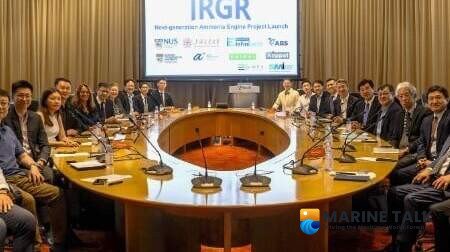
The National University of Singapore (NUS) has launched a new project to advance near-zero-emissions ammonia marine engines. This significant initiative aims to contribute substantially to decarbonization efforts within the global maritime industry.
Project Focus and Objectives
The core of this project centers on developing marine engines designed to operate on ammonia, producing virtually no emissions. Such technological advancements are critical for reducing the environmental footprint of global shipping operations.
Decarbonizing the maritime sector remains a key challenge for environmental sustainability. This NUS-led effort directly addresses this by seeking innovative and cleaner propulsion solutions for large vessels.
The National University of Singapore (NUS) has launched a project to develop near-zero-emissions ammonia marine engines. This collaborative initiative aims to significantly decarbonize the global maritime industry by providing innovative and cleaner propulsion solutions, positioning NUS at the forefront of sustainable marine technology.
Collaborative Research and Development
Operating as an industry–academia collaboration, the project leverages the combined strengths of both sectors. This model facilitates the transfer of academic research into practical, real-world applications within the shipping industry.
The NUS College of Design and Engineering will serve as the primary base for this initiative. The College brings its established facilities and expert knowledge to the forefront of this pioneering research.
Towards a Sustainable Maritime Future
This project positions NUS at the forefront of sustainable marine technology development. It underscores a commitment to exploring alternative fuels that can help the maritime sector meet increasingly stringent environmental regulations.
Developing viable near-zero-emission engines offers a pathway to cleaner oceans and reduced atmospheric pollution. The success of such initiatives is vital for achieving international climate targets and fostering a greener future for global trade.




Leave a Comment