


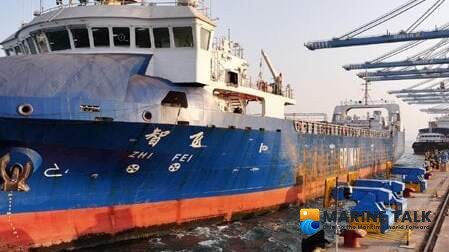
A Chinese autonomous, electric container feeder ship recently achieved a significant milestone, successfully completing its first fully autonomous docking and cargo handling operations. This development marks a notable advancement in the vessel’s capabilities, occurring four years after its initial entry into commercial service.
Autonomous Operations Achieved
The ship demonstrated its ability to navigate and manage complex port procedures without human intervention. This successful execution of both docking and cargo handling represents a critical step for maritime autonomy. It moves beyond simple navigation to encompass intricate logistical tasks.
A Chinese autonomous, electric container feeder ship achieved a significant milestone, successfully completing its first fully autonomous docking and cargo handling operations. Four years into service, this demonstrates enhanced maritime autonomy, proving the vessel can independently manage complex port logistics, promising greater industry efficiency and safety.
Advancing Maritime Technology
These recent operations specifically highlight a significant enhancement in the ship’s autonomous functions. The ability to perform complex maneuvers like docking, combined with the precision required for cargo handling, showcases the practical application of advanced self-operating systems in a real-world shipping environment.
Vessel’s Service History
The achievement follows four years of the vessel operating in commercial service. Its journey began with considerable attention, establishing its role as a pioneer in autonomous maritime transport. Operators have gathered extensive data and experience during this period.
Pioneering Claim
When it first launched, China had claimed this particular ship was the world’s first autonomous, electric container feeder vessel. This initial declaration positioned the ship at the forefront of global efforts to integrate sustainable and self-operating technologies into shipping.
Implications for Future Shipping
The successful completion of these fully autonomous operations holds broader implications for the future of maritime logistics. It underscores the potential for increased efficiency and safety through automation in port environments. Such advancements could redefine operational standards across the industry.
This achievement reinforces the ongoing global push towards developing and implementing autonomous shipping solutions. It provides a concrete example of how advanced technology can manage critical tasks, from vessel movement to cargo management, independently.




Leave a Comment