


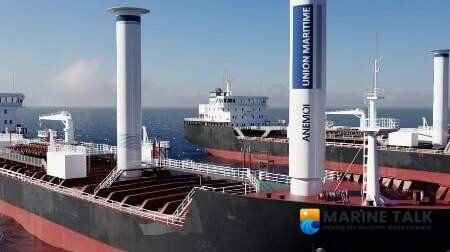
Anemoi Marine Technologies, a leading UK-based designer of wind-assisted ship propulsion systems, is set to equip two newbuild chemical tankers with its innovative Rotor Sails. This strategic deployment, involving vessels operated by Union Maritime, projects the tankers will significantly surpass the International Maritime Organization’s (IMO) 2030 environmental targets for emissions reduction. The move highlights a growing industry commitment to decarbonization through advanced maritime technologies.
Advanced Wind-Assisted Propulsion
Anemoi’s Rotor Sails leverage the Magnus effect to convert wind energy into thrust, effectively reducing the main engine’s load. This system offers a tangible solution for vessel operators seeking to improve fuel efficiency and lower their carbon footprint. The technology represents a critical step in integrating renewable energy into commercial shipping operations worldwide.
Anemoi Marine Technologies is equipping two Union Maritime chemical tankers with Rotor Sails, a wind-assisted propulsion system. This technology will significantly reduce fuel consumption and greenhouse gas emissions, enabling the vessels to surpass IMO 2030 environmental targets. This initiative marks a crucial step towards decarbonizing global shipping and sets a precedent for sustainable maritime transport.
Operational Benefits and Efficiency
Installing Rotor Sails provides immediate operational benefits. Ship owners can expect notable fuel savings, directly translating into reduced operating costs. Furthermore, the enhanced propulsion system offers increased flexibility in vessel speed and routing, allowing for optimized voyages even in varying weather conditions. This makes the technology an attractive proposition for the long-term sustainability of maritime transport.
Exceeding Environmental Mandates
The IMO’s 2030 targets mandate substantial reductions in greenhouse gas emissions from international shipping. By adopting Anemoi’s Rotor Sails, Union Maritime’s new chemical tankers are poised to not only meet but exceed these stringent regulations. This proactive approach demonstrates leadership in the industry’s collective effort to achieve ambitious environmental goals.
This initiative sets a precedent for other maritime companies considering similar investments in green technology. The successful integration of wind propulsion on these tankers will provide valuable operational data and further validate the commercial viability of such systems. It underscores a clear pathway towards a more sustainable future for the global shipping sector.


1 Comment