


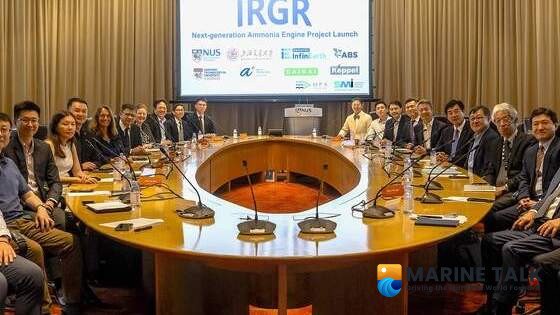
The National University of Singapore (NUS) recently launched a significant research initiative aimed at accelerating the global shipping industry’s decarbonization. This ambitious project focuses on developing next-generation marine engines, specifically designed to operate on ammonia. Researchers target high efficiency and near-zero emissions from these innovative power units.
Advancing Shipping Decarbonization
Global shipping plays a vital role in international trade, yet its environmental footprint demands urgent attention. The industry faces increasing pressure to reduce greenhouse gas emissions and transition towards more sustainable practices. NUS’s new project directly addresses this critical challenge by exploring alternative fuel solutions.
This research seeks to provide a viable pathway for maritime operators to comply with future environmental regulations and contribute to global climate goals. Developing advanced, clean-burning engines represents a crucial step in transforming the sector’s energy landscape.
The National University of Singapore launched a research initiative to accelerate global shipping decarbonization. It focuses on developing high-efficiency, near-zero emission marine engines powered by ammonia, a carbon-free fuel. This project aims to provide a viable pathway for the industry to meet environmental regulations and transition to sustainable maritime transport.
Ammonia as a Marine Fuel
Ammonia emerges as a promising candidate for marine fuel due to its potential for carbon-free combustion. Unlike traditional fossil fuels, ammonia does not produce carbon dioxide when burned, offering a significant advantage in the quest for zero-emission shipping.
The NUS project specifically focuses on refining ammonia-fueled engine technology. Engineers aim to overcome existing hurdles to ensure these engines not only achieve near-zero emissions but also deliver robust performance and exceptional fuel efficiency, critical factors for widespread industry adoption. This dual focus positions the research at the forefront of sustainable maritime innovation.
Ultimately, this initiative from the National University of Singapore could significantly impact the future of maritime transport, paving the way for a cleaner, more sustainable global shipping industry.





Leave a Comment