


The global maritime industry stands at a critical juncture. It is currently navigating a significant energy transition. This crucial shift, once considered a distant ambition, has now become an immediate reality for the sector. Shipping companies and stakeholders worldwide are actively pursuing cleaner fuel alternatives to meet evolving environmental standards.
Driving the Energy Shift
The impetus for this transformation stems from a combination of factors. Heightened environmental awareness, coupled with stringent international regulations, compels the shipping industry to reduce its carbon footprint. Operators face increasing pressure to adopt sustainable practices and demonstrate commitment to decarbonization targets. This collective push reshapes operational strategies across the board.
The maritime industry is undergoing a crucial energy transition, driven by environmental regulations. LNG is a key transitional fuel, reducing emissions, despite challenges like cost and methane slip. The sector is expanding LNG infrastructure while actively exploring other future fuels for a sustainable, low-carbon shipping future.
Regulatory Frameworks
International bodies, such as the International Maritime Organization (IMO), implement stricter emissions rules. These regulations set clear benchmarks for greenhouse gas reductions. Compliance demands innovative solutions and substantial investment in new technologies and fuels. Consequently, the industry explores a diverse portfolio of options.
Liquefied Natural Gas (LNG) as a Transitional Fuel
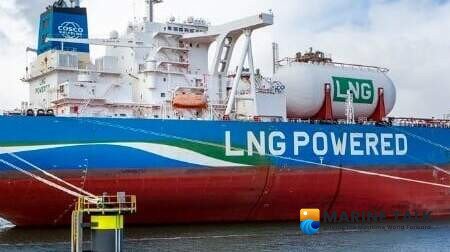
Among the various alternatives, Liquefied Natural Gas (LNG) has emerged as a prominent transitional fuel. Many shipping lines view LNG as a viable option for immediate emissions reductions. It offers a cleaner burning profile compared to traditional heavy fuel oils. This makes it an attractive choice for new builds and retrofits alike.
Environmental Advantages
LNG significantly reduces sulfur oxides (SOx) and particulate matter emissions to negligible levels. It also cuts nitrogen oxides (NOx) emissions by up to 85% compared to conventional marine fuels. Furthermore, LNG can reduce carbon dioxide (CO2) emissions by approximately 20-25%. These benefits align with global environmental objectives.
Expanding Infrastructure
The global infrastructure supporting LNG as a marine fuel continues to expand. More bunkering facilities are becoming available in key ports worldwide. This growing network enhances operational flexibility and increases accessibility for vessels adopting LNG propulsion. Shipowners gain confidence in the long-term viability of this fuel option.
Challenges and Future Outlook
Despite its advantages, the adoption of LNG is not without its complexities. The industry grapples with the initial investment costs associated with LNG-fueled vessels and bunkering infrastructure. Additionally, discussions around methane slip, the release of uncombusted methane, remain part of ongoing environmental considerations for its broader use. Researchers actively explore technological advancements to mitigate these challenges.
The maritime sector’s energy transition represents a multifaceted journey. It involves continuous innovation, strategic investments, and collaborative efforts. While LNG plays a crucial role in this initial phase, the industry also investigates other future fuels, including ammonia, methanol, and hydrogen. The overarching goal remains a sustainable and low-carbon future for global shipping operations.


Leave a Comment